Saturday, December 31, 2005

Thursday, December 29, 2005

Multimodal Interaction

"In Ten myths of multimodal interaction (Communications of the ACM, Vol. 42 , No. 11, pp. 74 - 81, 1999), Sharon Oviatt describes common myths about multimodal interaction (i.e. interacting with a computer using more different input/outputs, like mouse/voice/keyboards or more recent technologies). The myths she is describing are quite relevant to lots of HCI research:

Myth #1: If you build a multimodal system, users will interact multimodally.
Myth#2: Speech and pointing is the dominant multimodal integration pattern.
Myth #3: Multimodal input involves simultaneous signals.
Myth #4: Speech is the primary input mode in any multimodal system that includes it.
Myth #5: Multimodal language does not differ linguistically from unimodal language.
Myth #6: Multimodal integration involves redundancy of content between modes.
Myth #7: Individual error-prone recognition technologies combine multimodally to produce even greater unreliability.
Myth #8: All users’ multimodal commands are integrated in a uniform way
Myth #9: Different input modes are capable of transmitting comparable content.during periods of blank staring.
Myth #10: Enhanced efficiency is the main advantage of multimodal systems"

From a post by Nicolas Nova at Pasta & Vinegar
http://tecfa.unige.ch/perso/staf/nova/blog/2005/12/29/myths-of-multimodal-interaction/

PC/furniture?


A PC case mod done in a Japanese furniture style. From Extreme Tech. An interesting blend of technology and furniture. Reminds me of the 'wireless' we had when I was a kid: big, wooden and sat on the floor.

http://www.extremetech.com/article2/0,1558,1898200,00.asp

Thursday, December 22, 2005

Journal of Systemics, Cybernetics and Informatics

Jon Pengelly pointed out the language being used at the Journal of Systemics, Cybernetics and Informatics http://www.iiisci.org/journal/SCI/Home.asp is interesting.

"We are trying to support the process of interdisciplinary communication among and in the areas included in Systemics, Cybernetics and Informatics, by means of:

providing a multidisciplinary forum in the related areas,
fostering interdisciplinary research in them,
publishing papers related to transdisciplinary concepts, allowing different disciplinary perspectives on the same concept, and
encouraging communication among disciplines by means of interdisciplinary tutorials, and among the academic, the public and the private sectors by means of publishing information related multi- and inter-disciplinary projects which involve at least two of them."

The System of Objects

"To take an example: the most 'essential' and structural aspects of a coffee mill, and hence the most concretely objective things about it, are the electric motor, the electricity furnished by the power company, and the laws governing the production and transformation of energy; what is already less objective because it depends on a particular person's need, is the mill's actual coffee-grinding function; and what is not objective in the slightest, and hence inessential, is whether it is green and rectangular or pink and trapezoid... Indeed, the characteristic of the industrial object which distinguishes it from the craft object is that in the former the inessential is no longer left to the whims of individual demand and manufacture, but instead picked up and systematized by the production process, which today defines its aims by reference to what is inessential (and by reference to the universal combinatorial system of fashion)." pp7.
Baudrillard, Jean, 2005. The System of Objects. London: Verso.

Edgy Products

We submitted an expanded version of identityware for ISEA 2006. identityware www.idware.co.uk is an experimentation lab for ‘art-products’ based on an e-commerce model. The project includes innovative products and artefacts which challenge cultural, creative and economic conditional norms. The project focuses on the development of ‘object variants’ (i.e. modifications; creative departures, options, substitutes, mutations or evolutionary trajectories arrived at through an engagement with specific design technologies.) These art products tread the line between artist multiples, designed objects, and collectibles. As well as the existing rootoftwo work on the site we have new ideas from:

Peter Eudenbach (USA) http://www.petereudenbach.com/index.html
Jon Pengelly (UK) http://www.greenham-common-trust.co.uk/resident.htm (scroll down a bit)
Rob Price (USA) http://www.thwartdesign.com/index.html
Ken Rinaldo (USA) http://accad.osu.edu/~rinaldo/
Simon Ringe (UK) http://www.newtopologies.org/
Amy Youngs (USA) http://accad.osu.edu/~ayoungs/

Hopefully we'll get the new work up on the site soon.

Multimodal Aesthetics?

Another interesting meeting at Strathclyde University with the Design Imaging cluster http://www.dmem.strath.ac.uk/designimaging/ The issue of multimodal aesthetics came up making me think of this:

“Designing the interactive experience adds an entire dimension to the esthetic endeavour, one without precedent in the visual and plastic arts. In the west, the visual arts have no tradition of an esthetics of interactivity. Six hundred years of painting has resulted in a rich esthetics of the still image, of color and line, shape and area, of representational geometry and perspective. The effect of six hundred years of enculturation is that we know how to read images (which observe the conventions of renaissance perspective) before we can read text. One hundred years of moving image has given us a culturally established set of cinematic conventions: we can read cinema, but as yet we have no culturally established esthetic of real time interaction. The implications of this observation are resounding. Jonathan Crary cogently argues that meaning in an artwork is constituted between the viewer and the work, that the 'techniques of the observer' are as important as the techniques of the artist. Artists are struggling to establish a new canon, a new genre. However, not only are understandings about the dynamics of the interactive experience very limited among artists, but the 'techniques of the user' are non-existent. What results is a crisis of meaning: the work cannot 'mean' because the user doesn't speak the language.” Penny, Simon, 1996. From A to D and back again: the emerging aesthetics of interactive art. Leonardo Electronic Almanac Volume 4, No. 4 April.

We also spent a while on tacit knowledge and tacit knowing http://en.wikipedia.org/wiki/Tacit_knowledge - particularly the location of it: head vs. hands. I tried to explain that for me, a lot of my tacit understanding is through my hands. I can't verbally explain some things but my hands know what to do. The example was given of a telephone number or a keycode that you can't remember until the keypad is at your fingertips. Perhaps this is more to do with Kinesthetics?

Sunday, December 11, 2005

Plasticity - Sascha Pohflepp


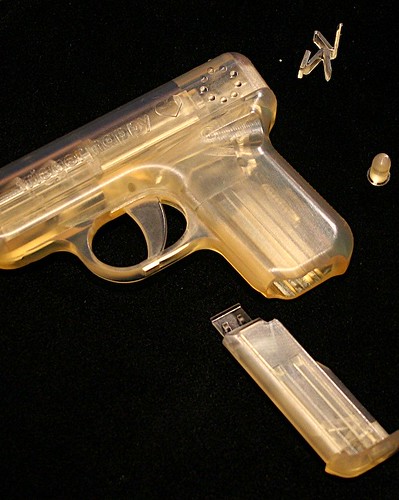
Some interesting ideas and links are over at Sascha Pohflepp's blog http://weblogs.digital.udk-berlin.de/saschaklasse/archives/003152.html - some interesting links, too. Such as Tim Stolzenberg's RP gun http://www.we-make-money-not-art.com/archives/007614.php done at the RCA (pictured).

Homepage at: http://www.plugimi.com/

Thanks to MK http://michelle.kasprzak.ca/ for pointing this out to me.

Thursday, December 08, 2005

Wiki Words

Over there on the sidebar >>> is a link to the designed objects wiki where I am dumping information that needs to be kept somewhere.

I just added a laundry-list of terms http://designedobjects.pbwiki.com/KEYWORDS that may or may not prove useful in trying to determine exactly the type of things I am dealing with. I've been collecting these from the reading I've been doing and some I just made up. Hopefully, I'll get around to categorising, citing and defining them at some point.

Monday, December 05, 2005

Big, thick & now downloadable.

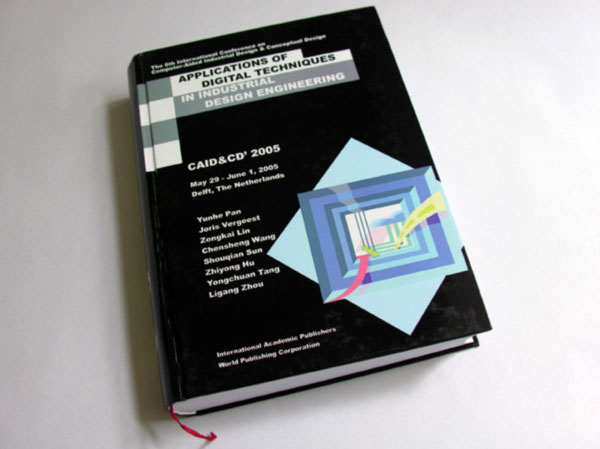
"Applications of Digital Techniques in Industrial Design Engineering - CAID&CD 2005" published by International Academic Publishers/World Publishing Corporation, Beijing, PRC. (ISBN is: 7-5062-7444-2.) is now available online.

http://www.io.tudelft.nl/caidcd2005/

My paper is on pages 308-313.
Also available at: Download marshallpengellyfinal_ebook_caidcd_05.pdf

Sorting

This weekend, I spent a good deal of time sorting through bits of paper (some bound up as books, others in thick piles with interminable scribblings on them.) It struck me that I spend most of my time these days categorising information. There is a great deal of anxiety involved in determining categories and even more in finding places to abandon the bits that don't neatly fit in one or other. It brings to mind the passage from Jorge Luis Borges that Michel Foucault refers to in the Preface to "The Order of Things."

"These ambiguities, redundancies and deficiencies remind us of those which Dr.
Franz Kuhn attributes to a certain Chinese encyclopaedia entitled The Celestial
Emporium of Benevolent Knowledge. In its remote pages it is written that the
animals are divided into:

a. belonging to the Emperor
b. embalmed
c. trained
d. pigs
e. sirens
f. fabulous
g. stray dogs
h. included in this classification
i. trembling like crazy
j. innumerable
k. drawn with a very fine camelhair brush
l. et cetera
m. just broke the vase
n. from a distance look like flies"

http://www.crockford.com/wrrrld/wilkins.html

No conclusions, just a sense of impending overload.

Mapping

The collection of ways of presenting information graphically at http://www.visualcomplexity.com/ is nothing less than stunning. Overwhelming, but enjoyable. Bookmark.

Friday, December 02, 2005

Design Imaging

I have been contributing to the Design Imaging Research Cluster.

Broad questions addressed by the group are:
Can existing and emerging technologies be used to improve the design function?
Are there new ways, without regard to real or anticipated technological limitations, of communicating ideas and designs using multi-modal imaging?
Can imaging increase inclusion in all aspects of the design process?
Will the application of imaging technologies to design increase or support creativity and the creative processes?
How can design imaging be used to support education and learning in design?

The research cluster has taken a fascinating and revolutionary approach to the investigation of design. The approach and scope of the work has inspired and attracted people from a broad range of disciplines – people who rarely, if ever, get the opportunity to collaborate - and has allowed us to assemble a diverse group of experts. Members of the core cluster come from backgrounds including design, computer graphics, virtual reality, visual and musical arts, psychology, display technology, communications and telepresence, but all are focused on using their expertise to improve the design process and create something new and better than the status quo.

http://www.dmem.strath.ac.uk/designimaging/

Grounded Theory?

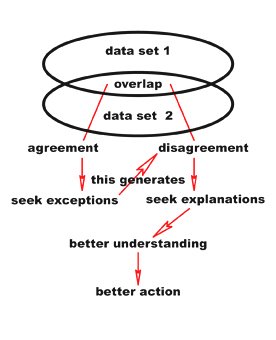
I like this diagram, it sort of mirrors the approach I have been taking - constantly comparing back and forth between 2 sets of data to allow criteria to emerge. The original is here: http://www.scu.edu.au/schools/gcm/ar/arp/grounded.html

More on GT here:http://en.wikipedia.org/wiki/Grounded_theory_(Glaser)

Research Goldmine

Pentti Routio of University of Arts & Design, Helsinki has to be thanked for his incredibly generous online resource: Arteology- or the Science of Artifacts. Set aside a couple of days and dive in http://www.uiah.fi/projects/metodi/110.htm

...is not equal to...

"He then denigrated the new Minimalist art, describing it as "closer to furniture than art," and claiming that it lacked formal complexity and feeling and was nothing more than a kind of "good design" that was preplanned and executed by someone else."

Greenberg, Clement cited in Bloemink, Barbara, 2004. Design ≠ art: functional objects from Donald Judd to Rachel Whiteread. London: Merrell Publishers.

Classification and its Consequences

“Boundary objects are those objects that both inhabit several communities of practice and satisfy the informational requirements of each of them. Boundary objects are thus both plastic enough to adapt to local needs and constraints of the several parties employing them, yet robust enough to maintain a common identity across sites. They are weakly structured in common use and become strongly structured in individual-site use. These objects may be abstract or concrete... Such objects have different meanings in different social worlds but their structure is common enough to more than one world to make them recognizable, a means of translation. The creation and management of boundary objects is a key process in developing and maintaining coherence across intersecting communities.” pp297.

Bowker, Geoffrey & Star, Susan Leigh, 1999. Sorting things out: classification and its consequences. Cambridge, MA: MIT Press.

A Philosophy of Design

"The words design, machine, technology, ars, and art are closely related to one another, one term being unthinkable without the others, and they all derive from the same existential view of the world." pp18.

Flusser, VilĂ©m, 1999. The shape of things – A philosophy of design. London: Reaktion Books Ltd.

Duchamp Quote

"If a three-dimensional object casts a two-dimensional shadow, then why isn't a three-dimensional object the shadow of a fourth dimension?" pp81.

Wines, James, in Ball & Naylor, 2005. Form Follows Idea. London: Black Dog Publishing.

The Material Culture of Everyday Life

"The material object is posited as the vehicle through which to explore the object/subject relationship, a condition that hovers somewhere between the physical presence and the visual image, between the reality of the inherent properties of materials and the myth of fantasy, and between empirical materiality and theoretical representation." pp11.

Attfield, Judy, 2000. Wild Things. Oxford: Berg Publishers. ISBN: 1859733697
Process Model


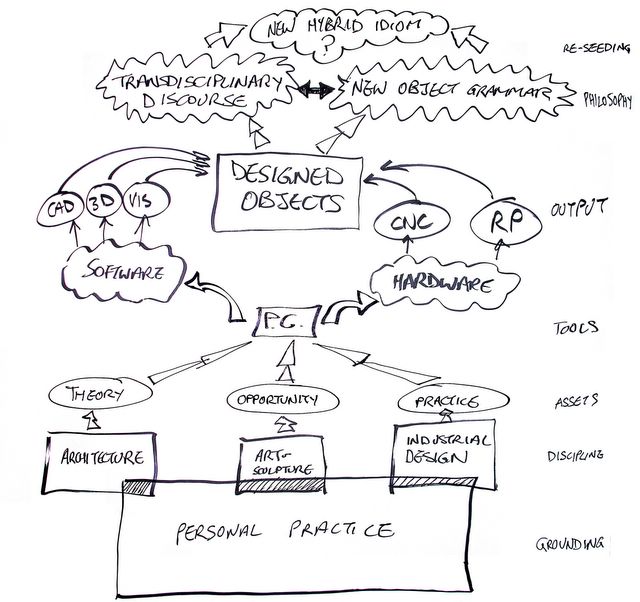
This is a diagram of a proposed process model for how communities of practice can contribute to and be 'inspired' by boundary object-type projects.

Thursday, December 01, 2005

Design Definitions

“Design is an interdisciplinary and integrative process constituting a professional field and an intellectual discipline.”

“Despite differences, ten challenges face the making disciplines. Common concerns and challenges are building bridges among design fields. These challenges bind the making disciplines together as a common research field.
The three performance challenges of making disciplines are that they:
  1. Act on the physical world.

  2. Address human needs.

  3. Generate the built environment
Changes in the larger world cause design scholars, practitioners, and students to converge on common challenges. These challenges require frameworks of theory and research to address problem areas and solve cases.

These problem areas involve four substantive challenges:
  1. Ambiguous boundaries between artefact, structure, and process.

  2. Large-scale social, economic, and industrial frames.

  3. A complex environment of needs, requirements, and constraints.

  4. Information content that often exceeds the value of physical substance.
They also involve three contextual challenges:
  1. A complex environment in which many projects or products cross the boundaries of several organizations, stakeholder, producer, and user groups.

  2. Projects or products that must meet the expectations of many organizations, stakeholders, producers, and users.

  3. Different – and sometimes conflicting – demands at every level of production, distribution, reception, and control.”
“Professional design practice today involves advanced knowledge. This knowledge isn’t a higher level of professional practice. It is a qualitatively different form of professional practice. It is emerging in response to the demands of the information society and the knowledge economy.”

Friedman, Ken, in Durling, David, ed. 2000. Doctoral education in design: foundations for the future. Stoke-on-Trent: Staffordshire University Press.

3D Computer Technologies

3D Computer Technologies - The range of tools and processes made available by the proliferation of the personal microcomputer since the late eighties - both the software and hardware - computer aided design and computer aided manufacture (CAD/CAM). Not only Rapid Prototyping (RP) and Computer Numerically Controlled (CNC) cutting/milling technologies but also the range of software packages that afford practitioners the ability to output both 2d and 3d digital data as images, geometry, tool paths, etc. The availability of these technologies has enabled a distinct way of working which has a recognisable discourse and increasing numbers of practitioners and has afforded integration between distinct axiomatic domains.

New Object Grammar

New Object Grammar - systems, rules or underlying principles that contribute to our understanding of visual language – in this case, comprised of both morphology (form?) and syntax (function?) in the field of ‘designed objects’. A vocabulary for objects that eclipse conventional tropes and occupy the territory (terrain vague*) between art and design and pose questions about the cultural context of designed objects which engage with a reflexive discourse and second order understanding of the processes and products of design. A crafted language by which to engage with provocative and challenging questions that push the cultural and aesthetic limits of objects which are produced with intentions beyond conforming to cultural, social, technical and economic expectation and a fixed means-end relationship.

*Terrain Vague is a French term used by Spanish architect and critic Ignasi de SolĂ -Morales to describe ambiguous, unresolved, and marginalised spaces in the urban landscape. Terrain vague refers to sites that are often ignored in the mainstream discourse on architecture and design, such as industrial wastelands and monotonous suburban developments.

Boundary Objects

“Boundary objects are those objects that both inhabit several communities of practice and satisfy the informational requirements of each of them. Boundary objects are thus both plastic enough to adapt to local needs and constraints of the several parties employing them, yet robust enough to maintain a common identity across sites. They are weakly structured in common use and become strongly structured in individual-site use. These objects may be abstract or concrete... Such objects have different meanings in different social worlds but their structure is common enough to more than one world to make them recognizable, a means of translation. The creation and management of boundary objects is a key process in developing and maintaining coherence across intersecting communities.”

Bowker, Geoffrey & Star, Susan Leigh, 1999. Sorting things out: classification and its consequences. Cambridge, MA: MIT Press.

Practitioners that are using industrial technologies to unconventional ends define a community of interest made up of artists, architects and designers. Each of these distinct communities of practice has a certain amount of shared understanding, common points of reference and an ongoing domain-based discourse. However, in defining this as a community of interest we have brought these distinct communities of practice into relation with one another around particular issues of common concern.

The distinct communities of practice may ascribe different meanings and importance to exemplary projects as boundary objects but these represent an opportunity to bring the discourses together - a means of coordination and alignment and as a means of translation that allow the community of interest to have a common working arrangement and to communicate their different concerns simultaneously. This brings about the transdisciplinary potential of dealing with the same issues and concerns across axiomatic boundaries. New sets of creative, cultural and economic conditions have stimulated intriguing levels of inquiry by creative practitioners to work across two or more of these domains and to seek out and use technologies that facilitate a particular blurring between these disciplines. This convergence has been enabled and accelerated by the development and proliferation of computer visualisation and manufacturing processes. Insights gained from these technologically driven, experiments from the domains of art, design and architecture are largely transferable across disciplines of art & design practices - discoveries in one area are likely to ‘feed’ applications and implications within another.

Edgy Products - ISEA 2006

http://isea2006.sjsu.edu/edgyproducts/

"The consumer electronic device has become the standard currency of technology in contemporary global culture. The light bulb and the home sewing machine have bred and multiplied to fill every part of our homes, offices, pockets and purses. They have colonized industry after industry: publishing, photography, music, film, communications, and entertainment. Consumer electronics have gradually colonized publication and photography, music and film, communications and entertainment. With the constant promise of increased efficiency, these devices may be seen as improvements over previous techniques. But for every measure of ease or efficiency there are secondary effects, artifacts, and renegotiations. Far from being neutral, consumer products are powerful arguments for norms and lifestyles, suggesting and facilitating specific ways of acting and being in the world. Made by researchers and marketers working for corporations, they form a sort of culture industry. And as Theodor Adorno suggested, their products serve the interests of this industry as much as they serve their users.

Artists and designers have tried to refigure the product, with varied results: Modernist painters, for instance, often incorporated coffee grinders or industrial aesthetics; Warhol even ran a factory. Electronic artists, though, are in a unique position to develop functional alternatives. Dunne and Raby have theorized a darker, more complicated _design noir,_ comparing traditional products to the banality of Hollywood film. Others have moved towards turning Consumer Off The Shelf (COTS) tools into weapons for activism and non-violent political dissent. Such projects acknowledge the importance of products to shape our lives, and then use the idiom of an _edgy_ product to offer alternatives, stage critiques, or subvert market interests.

Edgy Products is a call for work by artists and designers who are manipulating, hacking, subverting, queering, hijacking, recombining, or reformulating the notion of product. We are looking for projects large and small, for gallery installation or public intervention, for showing, selling, or gifting."

CALL COMMITTEE:
Co-Chair, Susan Joyce, Chris Csikszentmihalyi, Kelly Dobson, Anthony Dunne, Nathan Martin, Eddo Stern.

SUBMISSIONS
http://isea2006.sjsu.edu/register/submission.php

TIMEFRAME:
Announcement November 1, 2005Submissions due December 15, 2005Accepted proposals announced February 10, 2006

If you have questions contact: mailto:edgyproducts@yproductions.com
DESIGN – FUNCTION ≠ ART?

Why would engaging with the discourse happening across a conventional boundary between domains (art and design) prove an effective strategy to transcend the pathologies and conventions of individual axiomatic domains?

Of the axiomatic domains, ‘design’ is distinctive in that the term itself is used as both a noun and a verb, placing emphasis on what practitioners do, rather than what they produce (Flusser, 1999 and Fairs, 2004.) ‘Art’ and ‘architecture’ are products - whereas ‘design’ is a process. Rather than being a weakness - as has been discussed elsewhere (Krippendorff, 1995.) this condition can be seen as a strength. Indeed, the impetus behind the call to ‘redesign design’ is the defence of the discipline from colonisation from ‘harder’ disciplines such as engineering, marketing, and business. Arguably from this point of view, design is now also under threat from the ‘softer’ discipline of art. This study proposes that this situation can be viewed as a strategic advantage – it affords practitioners the opportunity to engage with a wider (transdisciplinary) discourse; a second-order understanding of theory; and the ability to engage with a range of new aesthetic, cultural, psychological, economic and social conditions.

Design is an interdisciplinary, integrative process comprising both a professional field and an intellectual discipline (Friedman, 2000.) However, currently within the field there are strongly contested arguments as to what this constitutes. This is most easily indicated by the disagreement at London’s Design Museum between ex-Chairman, James Dyson and Director, Alice Rawsthorn (Fairs, 2004.) This collision of ideologies appears to have emerged out of a tacit, redefinition of what design can be; from an expanded perspective and in light of the impact of a transition to an information-based economy. This high-profile and much publicised difference of opinion serves to indicate a need for new frameworks of theory and research to address this problem.

Etymologically, the root of the word “design” is connected to “art” and “technology” (Flusser, 1999.) Historically, art and technology have been increasingly culturally segregated with design forming a sort of bridge between the two (ibid.) This can be traced from the time of the Renaissance onwards, culminating in the late Nineteenth and early Twentieth Century with the Arts and Crafts Movement’s critical stance on industrialisation giving rise to the unified aesthetic of Art Nouveau in opposition to undesigned everyday existence (Tomes & Armstrong, 2003.) and conversely Constructivism, De Stijl and the Bauhaus’s mass availability and a unified machine aesthetic (ibid.)

In this sense, design has been caught in a cultural tug-o-war between Enlightenment rationalism and Romantic expressionism (Storkerson, 1997.) This is the case more so now than at any time previously in history. The professional field of design depends on the predictability of results to maintain the confidence of its client base. Yet, the transition to an information-based economy means that designed objects are consumed more widely and in many new ways than ever before. Contemporary design is something distinct from function (Fairs, 2004.) The functionalist philosophy of design as espoused in the Bauhaus dictum “form follows function” no longer applies when the principle aim of consumer product development specifications is to present users with the attractiveness, behaviour, and emotional qualities of designed objects. The diversity of the resulting distinct traditions, methods, vocabularies and job descriptions (Friedman, 2000.) threaten the coherence of the field as a unified discipline.

However, by viewing design as an integrative discipline and the generator of hybrid cultural forms presents the profession with the opportunity to rethink design as a cultural driver of enormous magnitude in the conjunction of the domains of art and technology. Indeed, this conception of design has been put forward as a role that is fundamental to the continual reinvigoration of the arts (Coles, 2005.) In the context of the current study, this perspective makes sense of the ascendant position of design as forged by the use of 3D computer technologies in the production of works of art.

Coles, Alex, 2005. On art’s romance with design. Design Issues: Volume 21, Number 3. Cambridge, MA: MIT Press.

Fairs, Marcus, 2004. What is design? Icon 018. December. [online] Available from: http://www.icon-magazine.co.uk/issues/018/whatisdesign.htm

Flusser, VilĂ©m, 1999. The shape of things – A philosophy of design. London: Reaktion Books Ltd.

Friedman, Ken, in Durling, David, ed. 2000. Doctoral education in design: foundations for the future. Stoke-on-Trent: Staffordshire University Press.

Krippendorff, Klaus, 1995. Redesigning design: an invitation to a responsible future. [online] Available from: http://www.asc.upenn.edu/USR/krippendorff/REDESGN.htm

Tomes, Anne & Armstrong, Peter, 2003. Dialectics of design: how ideas of 'good design' change. [online] Available from: http://www.ub.es/5ead/PDF/6/TomesArmstrong.pdf

Storkerson, Peter, 1997. Defining design: a new perspective to help specify the field. [online] Available from: http://www.communicationcognition.com/Publications/ConstructivistDesign.pdf

Perimeters, Boundaries, Borders

My study aims to demonstrate the transdisciplinary discourse evolving around the creation of genuine innovation in object type and form – a new object grammar of critical aesthetic, cultural, psychological and social possibilities through an iterative mapping process. Initially the scope of the research was considered an interdisciplinary study to build a theoretical framework to underpin new works. The research has evolved to where it has become more meaningful to use the term “transdisciplinary” to describe the nature of the interpenetration of art and design domains. The advantage of the latter is in the fact that it seems to better address practitioners that are dealing with the same issues and concerns across axiomatic boundaries. Rather than dealing with internal disciplinary issues they are examining common concerns arising out of the way objects come into being and their cultural context at this time in history and with the common tools available. There is an underpinning synthesis of vocabulary, methods and intentions which goes further than existing disciplinary paradigms. The research proposes to draw a (dotted) line around these practices as a permeable, conceptual construct to aid in understanding the broader and more complex questions being asked than any one domain can adequately address alone.

This idea of a “dotted line” is an interesting and useful one to explore. The work published to date (Marshall & Pengelly, 2005a, 2005b.) has shared the common title “Perimeters, Boundaries, Borders” – initially this was verbal shorthand, merely used to point at the fact that the research was more concerned with the lines between axiomatic domains than the domains themselves. It was recognised that to the lay person understood the title as “Border, Border, Border”. The criteria of distinction and the specific meaning of these terms of reference therefore become of great importance. A perimeter describes the outside of something, its outer extent. If one thinks of a circle the perimeter defines the edge (Can you separate the perimeter from the circle itself? Or are they one and the same?) A perimeter is of something. A boundary seems to define the same thing but from the other side – the inside (Limit perhaps? Difference between limit & extent?) It has been imposed onto something from outside. This is sketchy but seems to make some sense. In Heideggerian terms a boundary is the point where something begins its presencing (Heidegger, 1971.) – the point of distinction between the thing and everything that is not the thing. A border seems to indicate the definition of a zone between two other areas, a corridor, gateway or permeable membrane. In this sense it is more meaningful to think of this as a “harder” or more filled-in line than the other terms since distinct criteria must be met in order to cross the check-point from one side to another. This may just be metaphorical language but it may prove useful in defining terms and making distinctions between things.

Heidegger, Martin, 1971. Poetry, Language, Thought. Translated by Albert Hofstadter. New York: Harper Colophon Books.

Marshall, John & Pengelly, Jon, in Pan, Yunhe, et al. eds. 2005a. Applications of Digital Techniques in Industrial Design Engineering - CAID&CD. Beijing: International Academic Publishers/World Publishing Corporation.

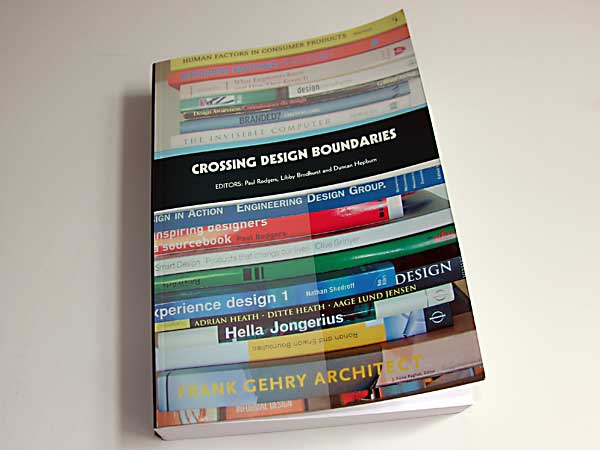
Marshall, John & Pengelly, Jon, in Rodgers, Brodhurst & Hepburn eds. 2005b. Crossing Design Boundaries. London: Taylor & Francis Group.

Designed Objects

Questions of materiality are especially important for practitioners from the art and design (making) disciplines working with digital technologies to produce designed objects. In the past decade we have witnessed an unprecedented development and increased accessibility of CAD/CAM (Computer Aided Design/Manufacture) technologies. This has brought about greatly enhanced functionality for traditional design techniques, helping designers in many areas to bring their ideas to fruition with increased speed and productivity. Whilst the pragmatic aspect of increased speed and productivity are important, this research project seeks to explore how the use of industrial technologies to unconventional ends can result in unique forms of output in terms of objects and critical practice that go beyond the individual axioms of art and design disciplines. These technologies facilitate the realisation of objects previously not possible to produce without prohibitive, large-scale commercial investment.

If CAD/CAM and 3D visualisation has freed practitioners from ‘how’ an object is produced, to a position where they can focus on ‘what’ those objects might be (in terms of cultural impact) the research suggests that practitioners in the fields of art and design are entering a stage where they are afforded the opportunity to ask new questions about the cultural context of objects informed by the democratisation of these 3D technologies. This creates a situation where technological development invokes entire new phyla of objects. This research project explores these emergent possibilities for artists/product designers/architects in order to bring about new types of critical/cultural/technological objects into being which both express this evolving production syntax and a developing commitment to innovation at the conceptual design phase.

The PhD project proposes an approach that uses the design of ‘art products’ as a way of provoking reflection on the exploitation of computer technologies as a medium to be critically explored in order to cultivate new interactions between object/audience & product/user. I have borrowed the term ‘designed objects’ for these things (and the title of this blog) from The School of the Art Institute of Chicago’s newest programme.

http://www.artic.edu/saic/programs/depts/undergrad/designedobj.html

Rationale

At the present time, the conjunction of technology and culture (largely due to the impact of computing) has brought about the opportunity to re-evaluate the critical positions available to creative practitioners (in this case, architects, product designers and sculptors) in defining objects to engage audiences with a range of aesthetic, cultural, psychological and social issues. As these technologies become increasingly affordable and prevalent and computing enters its ‘pervasive’ networked phase the expectations we have of the objects we surround ourselves with will transform (specifically, cultural objects or art products whose function is to provide alternate or parallel values to conventional design discourse). The purpose of the research is to pose the question: do 3D computer technologies play a role in bringing about a recognisable transdisciplinary discourse and a distinct, new object grammar emerging from the application of industrial means, methods and processes to ‘para-functional’ and ‘non-design’ ends? It forms a hypothesis for action and a strategy for practice.

EPDE 05


Back in September, I presented a paper at the 3rd Engineering & Product Design Education International Conference organised by the School of Design and Media Arts at Napier University, Edinburgh in participation with the Design Education Special Interest Group (DESIG) of the Design Society, and the Institute of Engineering Designers, UK (IED). The proceedings for the conference are published as: Crossing Design Boundaries, Rodgers, Brodhurst & Hepburn (eds.) Taylor & Francis Group, London, 2005. ISBN 0415391180. The paper was co-authored with my Supervisor, Jon Pengelly and sets out some initial ideas from beginning the research. If anyone is particularly interested, the paper is here:
Download EPDE05_marshallpengelly_ebook_final.pdf

Hello, World.

This blog is an outboard repository for the PhD research project I am undertaking at Gray’s School of Art, Aberdeen, UK. The research examines the notion that new sets of creative, cultural and economic conditions exist for artists, designers and architects as a result of recent developments in 3D imaging, rapid prototyping and rapid manufacturing technologies. The research seeks to critically map how these technologies are impacting on current disciplinary boundaries and areas of practice within a hybrid, convergent field.

I started the research in October, 2004 – so there is some catching up to do. Hopefully I will be dumping a year’s worth of thoughts here soon.

About Me

Current Titles: Artistic Director of rootoftwo. Vice President of Fast-uk. Co-curator of Video In the Built Environment.

Specialties: CAD/CAM, rapid prototyping, 3D modelling & visualisation, artist/architect collaborations, curation.

Previous Experience: Freelance 3D Designer, 2002–present. Associate Lecturer, Leeds College of Art & Design, 2003–04. Designer/Model Maker, Evenflo Company, Inc. 1999–03.

Education: MA, Art as Environment, 1996–97, The Manchester Metropolitan University. MFA, Sculpture, 1994–96, The Ohio State University. BA(Hons), Fine Art, 1989–93, Glasgow School of Art.

Blog Archive

My Portfolio

John Marshall Portfolio

My Linkedin Profile

View John Marshall's profile on LinkedIn

rootoftwo's shared items

About

I am exploring a hybrid form of art and design practice through the use of computer-based design and fabrication tools. I am interested in experimental objects and spaces that are dynamic and responsive and seek to challenge perceptions, expectations and established behavior.

Creative Commons

My del.icio.us

Site Meter