Showing posts with label transdisciplinary. Show all posts

Monday, December 28, 2009

SmartSurfaces 1.0 Complete

Smartsurfaces_final019

The University of Michigan SmartSurfaces course is now complete. It was a collaborative, project-based learning experience in which undergraduate artists, designers, architects and engineers came together to build physical systems and structural surfaces that have the capability to adapt to information and environmental conditions.

The course was broken into two phases: an introductory / skill building phase, and the final project. For the first part of the course, participants focused on problem and constraint definition, structured brainstorming and skill building. Final teams were assigned in week six and the rest of the semester involved the production of the fully realized, funded projects shown below. Both phases focused on multidisciplinary, collaborative teams to carry out the assignments and projects. An important aspect of this course was the manner in which useful cross-fertilization emerged in the application of different disciplinary methodologies in response to concrete problems in practice.

Course participants had the opportunity to gain experience with using diverse tools and processes. Where possible, learning made use of practical problem solving through experimentation. All participants were challenged beyond their usual intellectual and disciplinary boundaries and had to negotiate and manage differences between the cultures of three university units (Art & Design, Architecture and Materials Science Engineering).

Each team was required to design, build, program and test a ‘heliotropic smartsurface’ that made use of:
Solar energy harvesting
Microcontroller programming (with Arduino) and circuit building
Parametric modeling (with Digital Project)
Digital fabrication

The teams had to consider and negotiate what makes a surface smart, and why we would be interested in a smart surface that follows the Sun. They had to engage a methodology of defining explicit relationships, complex behaviors, and unforeseen responses in a context of distributed authorship.

This is what they came up with:

Smartsurfaces_final000

The Shy Solar Array: An Adaptive Solar Array That Responds To Weather
Arrays of solar cells are vulnerable to their surroundings, do not maximize the sunlight-collecting surface area, and are unattractive. Inspired by the Mimosa Pudica plant and its tendency to shy away from external stimuli, our shy solar array was created. Our solar array protects itself from damaging elements such as snow or rain by flipping away from them. This will allow the solar array to be implemented in less than ideal weather locations, such as Michigan. Our solar array also maximizes the sun collecting surface area through its unique shape. The form of the array lends itself to a more efficient use of surface area by avoiding shadowing when the cell is rotated towards the sun. Also, the array stands out as a more desirable object that can serve as a stand-alone artifact as well as a useful solar array. Outside of the gallery this solar array would be implemented onto the rooftop of Michigan Engineering buildings as an alternative energy source. To further maximize the collected energy, the solar array should contain solar cells that are specially shaped to the design.

Team Fabric + Super J
Alyssa Ackerman – School of Art and Design
Johanna Brand – Taubman College of Architecture and Urban Planning
Yuming Jiang – Material Science and Engineering
Chris Johnson – Taubman College of Architecture and Urban Planning
Mat Schwartz - School of Art and Design
Michelle Svetkoff - Material Science and Engineering

Smartsurfaces_final003

The iWall Modular Light-Filtration System
The wall you see here is a modular, scalable, self-adjusting multi-aperture window, designed to optimize light flow into a room by manipulating the position of rotating wood panels. You could call it an 'automatic venetian blind', as that is the gist of the purpose. The system consists of 30 individual modules, with one panel per module, which allow a variable amount of light to pass through. The structural elements are built modularly, but circuitry elements - such as wiring - are set up in a non-modular fashion. Individual module apertures open and close in reaction to the intensity of the light that passes through the wall as detected by light-dependent resistors (LDRs), seen on the projection side, holding a relatively constant light level on the ‘interior’ of the wall at all times - this gives 'heliotropic' and 'smart' characteristics to the wall - 'surface', fitting it into the premise of the SmartSurfaces course. The actual actuation is by a grid of servos powered externally and controlled through inputs from an Arduino Mega and the LDRs. The materials used in the assembly of the individual modules were 3/16" cast acrylic cut by laser and 3/16" 6061 aluminum sheet cut by water jet.

Team iWall
Westley Josiah Burger
- Taubman College of Architecture and Urban Planning
Peter Hall - School of Art and Design
Brieana MacDonald - Taubman College of Architecture and Urban Planning
Michael Mathieu - Material Science and Engineering
Taylor McKenzie-Veal - School of Art and Design
Neil Poulin - Material Science and Engineering

Smartsurfaces_final013

Simon
Simon is a heliotropic, feel-good machine. He interacts with a user through motion and LED color mixing and enters a default solar-tracking mode when not in use. Face recognition technology, a simple joint system, and a flexible LED array make possible a wide range of movement and interaction while photovoltaic panels provide the power. By fusing emotional connections with the user, we hope to transform the concept of sustainability from a condition of sacrifice to that of pleasure.

Team Softcore
Rachel Boswell - School of Art and Designn
Eric Harman - School of Art and Design
Marc Maxey - Taubman College of Architecture and Urban Planning
Lindsey May - Taubman College of Architecture and Urban Planning
Damien Stonick - Material Science and Engineering
Zilin Wang - Material Science and Engineering

Smartsurfaces_final018

Exposure
Rather than using solar cells to convert sunlight into electrical energy, we are concerned with using the power of the sun in a more direct way. Exposure is a biological, heliotropic lighting system powered by photosynthesis. Living inside the piece are several Dinoflagellates, Pyrocystis fusiformis, aka bioluminescent algae. The bioluminescence of the organisms are set to a biological clock quite similar to our sleep cycle. During 12 hours of daylight Pyrocystis use the available light to photosynthesize, producing their own food and oxygen. At sunset the cells produce the chemicals that cause the luminescent reaction. If agitated during their 12-hour dark cycle, the algae give off a glowing blue light. In Exposure we have harvested several bioluminescent algae organisms, and embedded them into an architectural array. Within the array, varying panel heights correspond to the density of algae organisms contained in each unit. Infrared sensors located below the panels detect human presence, and trigger a motor. Attached to the motors, a cam makes contact with the panels creating enough motion to agitate the algae and expose their bioluminescent glow.

Team Slime
Ivan Adelson - Taubman College of Architecture and Urban Planning
Aidan Feldman - Computer Science Engineering & Department of Dance
Isaac Krauss - School of Art and Design
Laura Ligeski - Material Science and Engineering
Allison Sturm - School of Art and Design
David Theisz - Taubman College of Architecture and Urban Planning

The course will be offered again in Fall 2010.

Friday, September 11, 2009

Smartsurfaces

University of Michigan's Smartsurfaces course offers a collaborative, project-based learning experience in which artists, designers, architects and engineers come together to build physical systems and structural surfaces that have the capability to adapt to information and environmental conditions.

The course will operate as a multidisciplinary, hands-on think-tank where participants will pool their knowledge and skill sets to work together to produce environmentally sound and socially responsible projects. Public exhibition of these funded projects will provide an opportunity for participants to present their work to a wider audience and to review their achievements.

Projects will make use of the resources available to all participating university units, such as:

parametric modeling
digital fabrication
networked sensors
microcontroller programming
energy harvesting

The course begins September 11, 2009.

Sunday, March 22, 2009

Smartsurfaces (course)


"In order to prepare for a life of productive endeavor in the 21st century, undergraduates at the University of Michigan must learn problem solving across disciplines and launch inquiries in uncharted territories of knowledge and practice. They must examine the assumptions that inhere in a disciplinary perspective and integrate material outside of patterns they are taught. They must locate issues within larger frameworks of thought, negotiate multiple perspectives, and develop habits of critical questioning and creative problem solving. In addition, they must learn how to find their way through disconnected bodies of information and perspectives and create their own path to a coherent education. We believe that the major problems of our time, from the environment to poverty, from human rights to terrorism, from religious movements to health issues, cannot be studied effectively within any single discipline; all involve integrative, cross-disciplinary thinking."

Smartsurfaces - a multidisciplinary, hands-on think-tank

Karl Daubmann ARCH 409
John Marshall ARTDES 300
Max Shtein MSE 489, 490, 493

University of Michigan
Fall 2009
3 Credits
Fridays, 11am-5pm
Design Lab 1, Duderstadt Center

Smartsurfaces offers a collaborative, project-based learning experience in which artists, designers, architects and engineers come together to build physical systems and structural surfaces that have the capability to adapt to information and environmental conditions.

The course will operate as a multidisciplinary, hands-on think-tank where participants will pool their knowledge and skill sets to work together to produce environmentally sound and socially responsible projects. Public exhibition of these funded projects will provide an opportunity for participants to present their work to a wider audience and to review their achievements.

Projects will make use of the resources available to all participating university units, such as:
  • parametric modeling
  • digital fabrication
  • networked sensors
  • micro-controller programming
  • energy harvesting using solar cells and nanostructured materials
The course is a collaborative endeavor led by three professors who will advise and contribute to all team projects. Teams will make use of visiting lecturers, specialists, site visits and relevant stakeholder organizations.

We have been awarded a grant from the Multidisciplinary Learning and Team Teaching (MLTT) Initiative to support this new undergraduate, multidisciplinary, team-taught course.

Sunday, March 08, 2009

inter_multi_trans_actions preview (book)


inter_multi_trans_actions
Creative Practice at the Boundaries of Architecture, Design and Art
Edited by Paul Rodgers and Michael Smyth

[EDIT - the book is now called 'Digital Blur: Stories from the Edge of Creative Design Practice'.]

This book brings together ten of the world’s leading practitioners and thinkers from the fields of art, architecture and design who all share a common desire to exploit the latest computing technologies in their creative practice. The book reveals, for the first time, the working processes of these major practitioners’ work that breaks down traditional creative disciplinary boundaries. inter_multi_trans_actions provides a rich picture, both visually and textually, of the following ten leaders in the field – Jason Bruges Studio, Lucy Bullivant, Greyworld, HeHe, Crispin Jones, the Owl Project, the Pooch (BigDog Interactive), Bengt Sjolen, Troika, and Moritz Waldemeyer.

This book aims to inspire and inform any reader with an interest in design, architecture, art and/or technology and provides essential reading for any practitioner, researcher, educator, and/or other stakeholders involved in the creative arts and industries. The book provides a detailed insight into the techniques of these ten significant creative individuals and how they exploit the latest computing technologies in their work and the impact this will have for creative practice in the future.

• paperback
• ISBN: 978 1 904750 69 7
• 264pp
• 264 x 196mm
• £24.95
• Publication date: September 2009
• Middlesex University Press

Wednesday, March 04, 2009

inter_multi_trans_actions (book)


Inter_multi_trans_actions: Creative Practice at the Boundaries of Architecture, Design and Art (Paperback) by Paul Rodgers (Editor), Michael Smyth (Editor)
Paperback: 264 pages
Publisher: Middlesex University Press (1 Sep 2009)
ISBN-10: 1904750699
ISBN-13: 978-1904750697
Available to pre-order here.

Sunday, December 14, 2008

Piled Higher and Deeper

I finally got my piece of paper for 'An exploration of hybrid art & design practice using computer-based design and fabrication tools'.

Thursday, April 17, 2008

inter_multi_trans_actions (event)

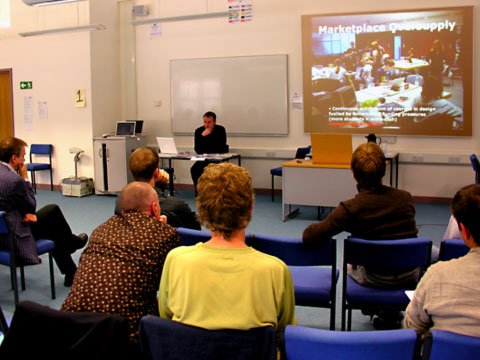
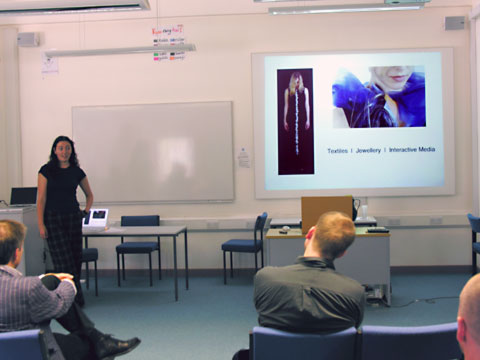
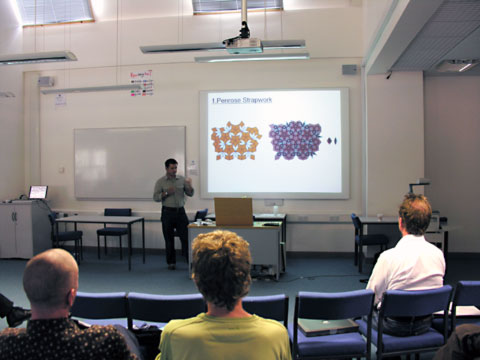
On Thursday 26 June, 2008 there will be a one-day symposium that I helped organize at Napier University in Edinburgh, Scotland. The symposium is titled:

inter_multi_trans_actions
emerging trends in post-disciplinary creative practice

This one day symposium will bring together a number of leading practitioners from the fields of art, architecture and design who each share a common desire to exploit the latest computing technologies in their creative practice. The invited speakers will reveal their cutting edge work that blurs the traditional boundaries of the creative disciplines.

Emerging trends in post-disciplinary creative practice highlight the interplay of conventional boundaries. Speakers:

Moritz Waldemeyer
is at the forefront of mechatronics, a combination of mechanics and electronics, that helps create innovative design ideas for concept cars, smart weapons and washing machines. Over the past few years, Waldemeyer has worked with the likes of Zaha Hadid, Ron Arad and Hussein Chalayan who have all availed themselves of his expert technical know how.

HeHe
Helen Evans and Heiko Hansen, the HeHe duo explore the territory that is the common ground for designers and artists. They have developed a concept of Cultural Reverse Engineering, that raises political, economical and sociological questions: to study a device or a software in order to modify its initial function is a way of re-appropriating the technology, in a world where most of us have no idea of the way everyday objects actually work nor how their cultural position has changed over time. The workshops they organize to “teach basic of DIY technologies, to students, artists and designers”, can be seen as a concrete application of that concept. HeHe is clearly related to the Lo-Fi philosophy (and it happens to be the title of one of their works), with its playful, yet serious, issues.

Usman Haque
has created responsive environments, interactive installations, digital interface devices and mass-participation performances. His skills include the design of both physical spaces and the software and systems that bring them to life. He has been an invited researcher at the Interaction Design Institute Ivrea, Italy, artist-in-residence at the International Academy of Media Arts and Sciences, Japan and has also worked in USA, UK and Malaysia. As well as directing the work of Haque Design + Research he was until 2005 a teacher in the Interactive Architecture Workshop at the Bartlett School of Architecture, London.

the POOCH
explore non-navigational spaces and interfacelessness. They use less technology, not useless technology and they like extreme prototyping. thePOOCH also prefer to build rather than blog. thePOOCH is a young company with a wealth of experience in computer programming for mobile applications, interactive art installations, advertising and live events. thePOOCH’s team of programmers has 40+ years combined experience in software engineering, user interface design, computer networking and hardware development. thePOOCH work one-on-one with clients and end-users to design, develop and build interactive installations that are tailored for specific target audiences.

TROIKA
is a multi-disciplinary art and design practice founded in 2003 by Conny Freyer, Eva Rucki and Sebastien Noel, who met while studying at the Royal College of Art. Our backgrounds in graphic, product design and communication allow us to engage in work that is at the intersection of the three disciplines, thinking of design as communication art. We develop a variety of self-initiated and commissioned projects that are both engaging and demanding to the user, from printed matter to product design and custom installations. Our approach focuses on the contamination between the arts and design disciplines and is born out of the same love for simplicity, playfulness, and an essential desire for provocation.

Greyworld
In 1993 Andrew Shoben founded Greyworld in Paris. Greyworld’s goal is to create works that articulate public spaces, allowing some form of self-expression in areas of the city that people see every day but normally exclude and ignore.

Jason Bruges Studio
is a Shoreditch based studio producing a diverse range of work that includes interactive light sculptures, interactive environments, events and screen-based installations. We explore the use of interactivity with the public and environment through the use of highly imaginative technologies. Jason Bruges Studio specialises in 'interactive light environments', from installations on the streets ofNew York to London's South Bank.

The Owl Project
make sculpture, music and sound art, notably the Log1K, Sound Lathe, Sound Chair and iLog. Drawing on influences such as woodworking, hobby style electronics and open source software to create music-making machines, they take a craft-based approach to designing their own interfaces and objects. The result is a distinctive range of musical and sculptural instruments that critique human interaction with computer interfaces and our increasing appetite for new and often disposable technologies.

Lucy Bullivant
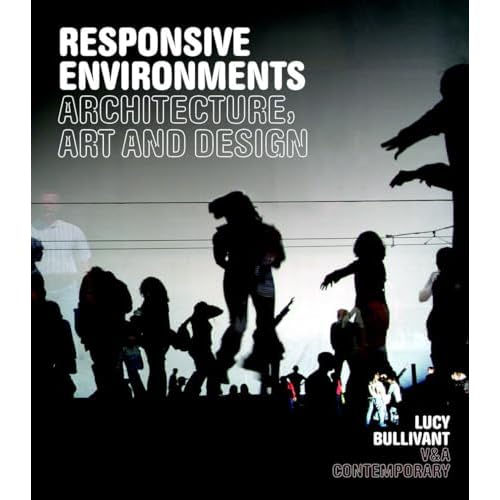
is an architectural curator, critic and author. Lucy has worked internationally with leading museums, galleries, cultural institutions, publishers and corporate bodies since 1987. Her latest book, Responsive Environments: Architecture, Art and Design (V&A Contemporary, 2006), explores the hybrid discipline of interactive architecture and design. She regularly contributes to Domus, The Plan, a+u, Volume, Architectural Record and Indesign, some of the world's most authoritative international architectural magazines.

Thursday 26 June, 2008
Faculty of Engineering, Computing, and Creative Industries
Napier University
Merchiston Campus
10 Colinton Road
Edinburgh EH10 5DT

Places are limited and cost £20.00 each (which will include a publication of the speakers’ essays published after the event).

Friday, October 19, 2007

Talking Shop - Glasgow School of Art (event)

Last night I gave a presentation as part of the "Talking Shop" series at Glasgow School of Art. These talks are aimed at expanding the conception of design and its related fields.
"While the physical world remains very much the product designer's realm, today's product designers are also operating in the age of information technology, where intellectual capital and continuous innovation are key. In order that the designers of the future are equipped not only to react to, but also to anticipate, propose & give 'form' to invisible products - such as systems, services, interactions & organisational behaviours- we need to expand the definition of the term 'product'; the product designer of the future must be equally at home within the world of emerging technologies."

Monday, October 15, 2007

PhD Thesis Submitted (at last)


Finally, I have submitted my PhD thesis. The title is "An exploration of hybrid art and design practice using computer-based design and fabrication tools." Here is the abstract:


The researcher’s previous experience suggested that the use of computer-based design and fabrication tools might enable new models of practice that yield a greater integration between the 3D art and design disciplines. A critical, contextual review was conducted to assess what kinds of objects are being produced by art and design practitioners; what the significant characteristics of these objects might be; and what technological, theoretical and contextual frameworks support their making. A survey of international practitioners was undertaken to establish how practitioners use these tools and engage with other art and design disciplines. From these a formalised system of analysis was developed to derive evaluative criteria for these objects.


The researcher developed a curatorial framework for a public exhibition and symposium that explored the direction that art and design practitioners are taking in relation to computer-based tools. These events allowed the researcher to survey existing works, explore future trends, gather audience and peer responses and engage the broader community of interest around the field of enquiry. Interviews were conducted with practitioners whose work was included in this exhibition and project stakeholders to reveal patterns and themes relevant to the theoretical framework of this study.


A model of the phases that practitioners go through when integrating computer-based tools into their practice was derived from an existing technology adoption model. Also, a contemporary version of R. Krauss’s ‘Klein Group’ was developed that takes into consideration developments in the field from the use of digital technologies. This was used to model the context within which the researcher’s practice is located. The research identifies a form of ‘technology-led-practice’ and an increased capacity for a ‘transdisciplinary discourse’ at the intersection of disciplinary domains. This study will be of interest to practitioners from across the 3D art and design disciplines that use computer-based tools.


The thesis is 455 pages and 142,000 words (including appendices). Eventually, I will get it online.

Monday, May 28, 2007

Hybrid Art

From: http://www.aec.at/en/prix/cat_hybrid_art.asp#details

The new “Hybrid Art” category is dedicated specifically to today’s hybrid and transdisciplinary projects and approaches to media art. Primary emphasis is on the process of fusing different media and genres into new forms of artistic expression as well as the act of transcending the boundaries between art and research, art and social/political activism, art and pop culture. Jurors will be looking very closely at how dynamically the submitted work defies classification in a single one of the Prix categories of long standing.

WHAT SHOULD YOU ENTER
This category is open to all types of current works in any form:

Autonomic Installations and Artworks
Autonomous Sculptures
Performance and Stageprojects
Media architectures
Media based Interventions in public spaces
Mechatronics / Kinetics / Robotics
Location based and geospatial storytelling
Multi user environments
Annotation software tools
Artificial Life
Transgenic Art
Software Art, Generative Art

Thursday, March 22, 2007

UM3D Lab


I am in Ann Arbor, Michigan, USA as a Roman J. Witt Visiting Artist. I am thoroughly enjoying it. I have spent quite a bit of time at the excellent UM3D Lab. This is an interdisciplinary service facility provides the university community with access to 3D computer modeling, 3D visualisation, and rapid prototyping of physical models. The Lab's resources and consulting services are available to students, faculty, and staff from all schools and colleges for exploration, education, and research. I think this is an excellent model of how to provide access to these technologies across disciplines within the University.

I was also very impressed with the Grant Opportunities [Collaborative Spaces] programme that awards grants to research projects driven by students using new tools to enhance collaborative learning. The projects must be interdisciplinary and must engage rich media and/or locative technologies.

Thursday, March 01, 2007

VAP

MIT's Visual Arts Program are looking for someone with international recognition as a practicing artist to teach introductory and advanced courses and develop a transdisciplinary Bachelor’s degree. Popping up all over...

Wednesday, February 07, 2007

Guldagergaard (event)

In the Cross-border of Digital Media and Physical Form
3rd - 4th February 2007
International Ceramic Research Centre
Guldagergaard
Heilmannsvej 31A
4230 Skælskør
Denmark

Guldagergaard was established as an international ceramic centre in the small Danish town of Skælskør in 1997. Guldagergaard has been working intensively with the Danish Museum of Art and Design, the Danish Art and Craft Association, and the Danish art and design educational institutions. Since 2005, Guldagergaard, West Zealand County Council, the Danish Museum of Art and Design, the Danmarks Designskole and the Danish Center for Design Research have developed a ceramic research program. In 2006, this resulted in a PhD stipend for ceramic research. In 2007 new facilities will include a large electric trolley kiln, gas kilns and a roof over all of the out-door kilns, and facilities for ceramic projects in combination with metal and wood. Guldagergaard are applying for extra funding for the artist-in-residence program to be able to offer Studio Residency Awards for specific ceramic projects and research.
Ann Linnemann - Director International Ceramic Research Centre DK
Flemming Tvede Hansen, Ph.D. Scholar, Ceramic Artist, Danmarks Designskole, DK www.flemmingtvede.dk

Geoffrey Mann, Product Artist, UK www.mrmann.co.uk

Anna Valgårda, Ph.D. Scholar, IT-University, Copenhagen. http://akav.dk

Lionel T. Dean, Engineer, Designer and Artist, UK www.futurefactories.com

Jonathan Keep, Artist Potter, UK http://www.keep-art.co.uk

Kirsten Nissen, Ph.D. Scholar, textile artist, Designskolen - Kolding, DK

Martin Bodilsen Kaldahl, Ceramic Artist, Artist in Residence, Danmarks Designskole

Simon Løvind, Interaction Designer, Artist in Residence, Danmarks Designskole, DK http://www.dkds.dk/forskning-og-kunstnerisk-virksomhed/Personer/Simon_Loevind


Whilst in Copenhagen I also met with Troels Degn Johansson author of the paper titled ‘Art in the context of design, design in the context of art’ and Rasmus Nielsen of artist trio Superflex.

A great set of presentations and a great seminar, great people and much pickled herring.

Saturday, October 21, 2006

Problem Boundaries

I found the following statement of interest because it is a succinct way of explaining what is meant by 'transdisciplinary' without using the phrase "interpenetration of disciplinary epistemologies" (which just makes eyes glaze over):

"Boundaries for transdisciplinary courses are the boundaries of the problem being addressed, not the artificial boundaries of disciplines".

This was made in the context of a discussion of a transdisciplinary model for research and education as applied to engineering on the website of TheATLAS - which (according to its own blurb) is a non-profit organisation providing services to universities around the world.

I also noticed that the new MFA Design curriculum (starting 2007) at the California College of the Arts is using the term 'transdisciplinary':

"As our world and cultures undergo radical transformations, so the role of design is growing and changing. The professional design world increasingly values broad, transdisciplinary design knowledge complemented by virtuosity in specialized fields ... Design continues to grow beyond the traditional notions of designing objects and messages and toward designing change—through transmedia systems and cultural interventions. As the boundaries between traditional disciplines blur, new forms and methods are emerging. Tomorrow's designers must comprehend a much broader realm of practice, and must likewise be ready to embrace greater opportunity and leadership in shaping the future of culture in fundamental ways."

Tuesday, October 03, 2006

Principles and Practices (conference)

INTERNATIONAL CONFERENCE ON DESIGN PRINCIPLES AND PRACTICES
Imperial College, London University, UK, 4-7 January, 2007.
http://www.design-conference.com/

This conference is a place discussion which explore the meaning and purpose of 'design', as well as speaking in grounded ways about the task of design and the use of designed artefacts and processes. The conference is a cross-disciplinary forum which brings together researchers, teachers and practitioners to discuss the nature and future of design. The resulting conversations weave between the theoretical and the empirical, research and application, market pragmatics and social idealism. In professional and disciplinary terms, the conference traverses a broad sweep to construct a transdisciplinary dialogue which encompasses the perspectives and practices of: anthropology, architecture, art, artificial intelligence, business, cognitive science, communication studies, computer science, cultural studies, design studies, education, e-learning, engineering, ergonomics, fashion, graphic design, history, information systems, industrial design, industrial engineering, instructional design, interior design, interaction design, interface design, journalism, landscape architecture, law, linguistics and semiotics, management, media and entertainment, psychology, sociology, software engineering, technical communication, telecommunications, urban planning and visual design.

As well as an impressive line up of plenary speakers, the conference will include numerous paper, workshop and colloquium presentations. We would welcome your submissions to the conference call for papers. If the presenter chooses, a paper may be submitted by participants before or up to one month after the conference. These will be peer-refereed and, if accepted by the referees, published in print and electronic formats in the new International Journal of Design Principles and Practices. If you are unable to attend the conference in person, virtual registrations are also available which allow you to submit a paper for refereeing and possible publication in this fully refereed academic journal, as well as access to the electronic version of the journal. The deadline for the next round call for papers (a title and abstract) is 30 September 2006. Presentation proposals are reviewed within four weeks of submission. Full details of the conference, including an online call for papers form, are to be found at the conference website - http://www.design-conference.com/

Sunday, October 01, 2006

PBB Symposium


The 'Perimeters, Boundaries and Borders' Symposium at St. Martin's College, Lancaster on Thursday 28 September, 1 – 5pm went really well. The discussion was self-sustaining (to the point that a summary was irrelevant) and raised many important points. The line up was as follows:

13.00 – 13.30 Arrival
13.30 – 13.45 Welcome, Introductions (John Hyatt of Miriad)
13.45 – 14.15 Keynote (Dr. Paul A. Rodgers of Napier University)
14.15 – 14.35 Tavs Jorgensen http://www.oktavius.co.uk/
14.35 – 14.55 Aoife Ludlow http://aoifestuff.com/
14.55 – 15.10 Break
15.10 – 15.35 Justin Marshall http://www.justinmarshall.co.uk/
15.35 – 15.55 Lionel T. Dean http://www.futurefactories.com/
15.55 – 16.15 Human Beans http://www.humanbeans.net/
16.15 – 16.45 Q+A, Discussion
16.45 – 17.00 Summary (John Marshall/Taylor Nuttal)
18.00 – 20.00 Private View @ Citylab, 4-5 Dalton Square, Lancaster LA1 4PP

I recorded the entire session and hope to get it online as a transcript or podcast in the near future.

Wednesday, August 09, 2006

Responsive Environments (book)

Responsive Environments: Architecture, Art and Design
by Lucy Bullivant
V & A Publications (15 May 2006)
ISBN: 1851774815

"Artistic manifestations of the use of digital technology in physical spaces are growing. Electronic billboards have been around for decades, but now the concept of connectivity has also literally seeped into the skins of buildings in new ways. Artists - and architects working in hybrid fields on interactive projects - are responding to the electro-physical flux of urban environments, coopting responsive dynamic media systems, wireless sensing, wearable computing and even topological media. They proactively consult scientific institutions to dig deeper into their environmental interests, and are not interested in 'tech' or smart spaces for the sake of it, but to create environments that act as mediating devices for a new social statement.

Drawing on interviews by the author with the designers, architects and artists featured - including Jason Bruges, Lars Spuybroek, Scott Snibbe, Diller + Scofidio, Ben Rubin, Rafael Lozano Hemmer, David Small, Christian Moeller, Usman Haque, HeHe, Electronic Shadow, Shona Kitchen and Ben Hooker, Stefano Mirti and Walter April, Casson Mann, Golan Levin, Sponge (Chris Salter, Sha Xin Wei, Laura Farabo), Toyo Ito, UN Studio, Mark Goulthorpe, Toshio Iwai and KDa, Maywa Denki, Sociable Media Group (MIT), d-squared, Allofus, Kas Oosterhuis, Tobi Schneidler, Décosterd + Rahm, Realities:united, Adam Somlai-Fischer and Mette Ramsgard Thomsen - this unique account sheds fresh light on the way new technologies are being harnessed, amidst a cultural context of growing multidisciplinary activity in art, architecture and design during the last 15 years."

Thursday, July 20, 2006

Wiki Article

I have posted an article to the Designed Objects Wiki. A version of this article has been published previously as: MARSHALL, J., & PENGELLY, J., 2006. Computer technologies and transdisciplinary discourse: critical drivers for hybrid design practice? Co Design, Vol. 2, No. 2. pp. 109-122.

Thursday, June 29, 2006

Community Green (project)


The Community Green project began as an ideas competition to explore notions of what a 21st century village green could be, using the inner-city suburb of Pollokshields, Glasgow, as an inspiration and test bed. Interdisciplinary teams of artists, architects, designers, and technologists were invited to submit proposals for public art projects that considered the role that technologies, especially those that have a low environmental impact, can play in the fostering of greater communication and participation within a community. Four teams were selected to develop their proposals into prototypes. The prototypes form the basis of an ideas resource to inform the regeneration of Pollokshields and include experimental street furniture, 3D electronic information-sharing points, modular greenspaces, and mobile platforms for public interaction.

The teams taking part in Community Green are:

be+ (Jude Barber and Uli Einslein)

Cameron Webster Architects + Ettie Spencer

Jaxi (Simon Chadwick, Tilo Einert, Adrian Lear, Neil McGuire)

Kevin Campbell, Douglas Fraser, Robert Sharp, Leo Warner.

Friday, June 23, 2006

Metadisciplinarity? (article)

I found an interesting point in Intelligent Agent vol. 6 no. 1 "Doing Interface Ecology: The Practice of Metadisciplinarity" by Andruid Kerne:


The value that transdisciplinarity places on the practice of disciplinary assemblage is a good start. The problem is that trans- means, "across, to or on the farther side of, beyond, over." [31] Novak's transvergence moves this prescription forward by including an emphasis on connecting, but without theorizing the embodied practice of interface development. [32] While going across, beyond, and over disciplinary boundaries, the denotation of trans- is still lacking not only the structural imperative for assembling disciplines, but also a sense of how processes of disciplinary recombination are a formula for creating new knowledge. Nowotny observes that "Transdisciplinarity... is more than juxtaposition. ... If joint problem solving is the aim, then the means must provide for an integration of perspectives in the identification, formulation and resolution of what has to become a shared problem." [33] But, what are the structures and processes that catalyze this type of integration?

Kerne concludes:

The structure of metadisciplinarity connects theory and practice. ...These modes of practice are inseparable. Metadisciplinarity develops an awareness of the structures of situated disciplines that form relationships in interfaces. Through its practice, and intentional cultivation of these relationships, we can create hybrid forms of representation.

By viewing design as an integrative discipline and the generator of hybrid cultural forms it presents diverse design practitioners with opportunities to rethink design as a cultural driver of enormous magnitude in the conjunction of these other domains. Design, architecture and art may be discrete disciplines, but they have common characteristics that bring them into relation with one another. Practitioners are exploiting this relationship to bring together cultural commentary with aesthetics. In these instances the object isn't what changes – rather it is the audience’s perception of the object and its cultural context that is transformed.

In the anti-authorial literary theory of Roland Barthes and Michel Foucault the relationship between discourse and object is separated and articulated as a rupture within Modernism's attempt to produce a thing that would speak for itself. Barthes states that each text comprises multiple layers and plural meanings. Therefore readers of texts must divorce a literary work from its creator in order to liberate it from ‘interpretive tyranny’. In this sense the essential meaning of a work depends not on the impressions of the reader but rather on its audience. For Foucault, a ‘discourse’ is a body of thought and writing that is united by having a common object of study, a common methodology, and/or a set of common terms and ideas. Foucault discusses the idea of a transdiscursive position - those who are initiators of discursive practices, not just of individual texts.

Obviously within academia the boundaries of a discipline are important. However, in practice it seems that the ongoing discourse is more significant. Perhaps instead of speculating about new hybrid domains we should be placing emphasis on what it means to take transdiscursive positions?

Blog Archive

My Portfolio

John Marshall Portfolio

My Linkedin Profile

View John Marshall's profile on LinkedIn

rootoftwo's shared items

About

I am exploring a hybrid form of art and design practice through the use of computer-based design and fabrication tools. I am interested in experimental objects and spaces that are dynamic and responsive and seek to challenge perceptions, expectations and established behavior.

Creative Commons

My del.icio.us

Site Meter